TOPEKA, Kan. (AP) — A Kansas Senate committee approved a bill that would make it a felony for fugitives and domestic abusers to possess firearms.
Supporters say the new law would allow offenders to be prosecuted in state courts instead of relying on federal courts, which are sometimes too busy to handle such cases.
Jo Ella Hoye, a representative for Moms Demand Action, said she was happy with committees’ decision. She said the bill advanced Monday bill will help law enforcement protect women and families and ultimately save lives.
In addition to fugitives and domestic abusers, the bill also makes it a felony for an undocumented immigrant to have a firearm.
The committee also advanced a bill that would allow people who have concealed carry permits issued by other states to carry concealed firearms in Kansas.
BARTON COUNTY — Law enforcement authorities have made an arrest in connection with a fatal hit and run accident.
Just before 7:30 p.m. November 29, police were dispatched to a vehicle pedestrian accident in the 4200 Block of 10th Street in Great Bend. A vehicle struck and killed 65-year-old James Zager as he was crossing the street, according to a media release from Great Bend Police.
After a lengthy investigation, authorities identified the driver of the vehicle who left the scene. On Wednesday, the Barton County District Court issued an arrest warrant for 58-year-old Rodney Campbell, Jr., for failure to stop or remain at the scene of the accident resulting in death. On Thursday, the Texas Rangers arrested Campbell in Rural Anderson County, Texas in connection with the warrant.
Anyone with information on the accident is asked to contact the Great Bend Police Department.
SEDGWICK COUNTY —Law enforcement authorities and school district officials are investigating an alleged threat against schools in Valley Center.
According to a message from Superintendent Dr. Cory Gibson on the district’s social media account, law enforcement authorities contacted USD 262 officials Wednesday about a criminal threat directed toward officials at Valley Center High School.
The individual responsible for the threat was never on school grounds, according to the message from Gibson. Police arrested the suspect.
“We are thankful that the report was made and that law enforcement agencies responded immediately,” Gibson wrote.
BARTON COUNTY — Law enforcement authorities are investigating a crime scene and have made an arrest.
Schmidt-photo Barton Co.
Just after 8:30 Tuesday, Barton County Sheriff’s Office and the Ellinwood Police Department conducted a joint operation and executed a search warrant at a home in the 500 Block of South Humbolt Street in the city of Ellinwood, according to Sheriff Brian Bellendir.
Upon entry into the single residence officers located a substantial quantity of methamphetamine, firearms and drug paraphernalia.
Deputies arrested 40-year-old Scottie Schmidt, of Ellinwood and booked him on charges of distribution of methamphetamine, possession of marijuana, possession of drug paraphernalia, felon in possession of a firearm and no drug tax stamp.
Schmidt is a registered drug offender and is being held in lieu of a $100,000 bond. Sheriff’s deputies were on the scene several hours Tuesday night processing evidence.
Schmidt has previous convictions for Aggravated Indecent Solicitation of a child and Aggravated Indecent Liberties/Child less than 14;Fondling, according to the Kansas Department of Corrections.
RENO COUNTY -Law enforcement authorities are investigating a fatal Monday morning crash.
Just after 8:30 a.m., deputies were dispatched to the area of Sego Road and Castleton Road in Reno County for report of an overturned vehicle, according to Deputy Michael Morrel
First responders found a Chevy Suburban on its top in a clump of trees in a field on the east side of the road approximately a half mile south of Irish Creek Road on Sego Road.
Authorities located a man a few feet from the vehicle. The victim identified as Johnnie Nelson, 66, of Hutchinson, was pronounced dead at the scene, according to Morrel.
Authorities released no additional details.
————
RENO COUNTY -Law enforcement authorities are investigating a fatal Monday morning crash.
Just after 8:30 a.m., deputies were dispatched to the area of Sego Road and Castleton Road in Reno County for report of an overturned vehicle, according to Deputy Michael Morrel
First responders found a Chevy Suburban on its top in a clump of trees in a field on the east side of the road approximately a half mile south of Irish Creek Road on Sego Road.
Authorities located a man a few feet from the vehicle. He was pronounced dead at the scene, according to Morrel.
SALINE COUNTY — Law enforcement authorities are investigating a shooting and asking for help to locate a suspect.
On February 5, police responded to a report of a gunshot victim in the 100 block of N. Front St. in Salina, according to a police captain Paul Forrester.
During the course of the investigation, police identified 36-year-old Darren
James Jackson Sr., as the shooter.
Police issued a Saline County warrant for Jackson on charges of Aggravated Battery, Aggravated Robbery and Aggravated Kidnapping.
He is described as Hispanic, 5-foot-11, 198 pounds, black hair and brown eyes. Jackson also has numerous tattoos.
Jackson is considered armed and dangerous and if you have information of his whereabouts you are encouraged to call the Salina Police Department. Police encouraged the public not to approach or attempt the apprehension of Jackson.
He has a previous drug conviction, according to the Kansas Department of Corrections.
SALINE COUNTY — Law enforcement authorities and USD 305 officials are investigating a student for bringing weapons to school.
School officials discovered that a student brought a gun and knife to Stewart Elementary School, 2123 Roach Street in Salina on Friday, according to a media release.
The student brought the gun and knife, not with the intention of harming anyone but in response to a fake Facebook post that the student believed to be true, according to the school district.
The gun and knife were immediately secured and police contacted. The student has been removed from the school property.
Authorities released no additional details late Friday morning.
TOPEKA, Kan. (AP) — Wichita businessman Wink Hartman is ending his campaign for governor and endorsing Kris Kobach.
Hartman said Wednesday he decided during the Kansas GOP convention last weekend. He said his main goal is making the party’s conservative platform into policy to improve Kansas.
Hartman, head of Hartman Oil Co., says he is endorsing Kobach because the secretary of state is a fighter who will not back down from a fight for conservative principles.
Kobach is running against Gov. Jeff Colyer and several others for the GOP nomination in the gubernatorial race.
When asked whether he is interested in being lieutenant governor, Hartman said he would serve in any way Kobach asks him to.
Kobach said Wednesday that he is honored to have Hartman’s support.
Kansas sits in a shrinking pool of states with the strictest marijuana and hemp laws, surrounded by a wave of decriminalization and legalization that’s swept most of the U.S.
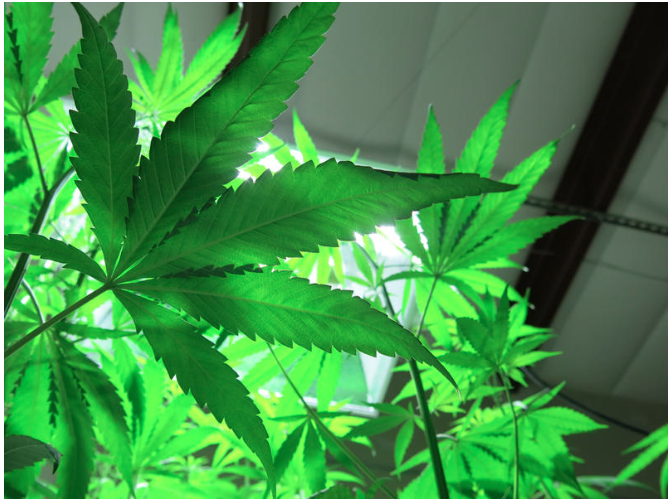
Lawmakers in Kansas, a state especially strict on all things marijuana, are at least considering opening the way for non-buzzy hemp production for industrial uses. FILE PHOTO / HARVEST PUBLIC MEDIA
So it’s no surprise that the topic of cannabis keeps cropping up in the Kansas Statehouse, where some lawmakers and lobbyists want the Free State to jump on the bandwagon.
That means terms like cannabidiol and tetrahydrocannabinol make their way into bills and debates. Here’s a primer on pot and policy in Kansas and elsewhere.
The marijuana boom
As far as the feds are concerned, marijuana is illegal.
Sure, the Obama administration nudged prosecutors not to go after people who sell it for medical use in states where that’s allowed. And it didn’t step in when states began allowing recreational use, either.
But administrations change. And Trump’s is showing more interest in a showdown between state and federal rules.
There’s potential, at least, for quite a clash. Tallies by the National Conference of State Legislatures show at least 29 states now allow medical marijuana, nine permitrecreational use and some others allow derivative products (more on that below).
Amid that patchwork, Kansas is one of just four states not allowing any of this, for any purposes.
Notably, next-door Colorado was one of two states to lead the charge on recreational use in 2012. It’s reasonable to think some skiers leaving the state on eastbound Interstate 70 might have a little skunk in the trunk. Yet Kansas law enforcement agencies told the attorney general in 2016 that they aren’t seizing more of the drug — but the stuff they find is stronger than before.
Industrial hemp
Hemp and marijuana come from the same plant species, but hemp has so little THC in it that drug users can’t get high from it. THC — tetrahydrocannabinol — is the cannabis chemical that causes that effect.
Since hemp has major industrial potential — it is used in a wide range of foods, fabrics and other products, but right now the U.S. mostly imports it from countries like Canada and China — there’s been a national push to make growing it legal.
Kansas hasn’t joined their ranks. Growing hemp remains illegal, with law enforcement agencies leading the opposition to legalization. They say it would make combating marijuana cultivation even harder, and that distinguishing between low and high-THC plants is a potentially costly hassle.
Like THC, cannabidiol is a compound found in cannabis. So both substances fall under another term that pops up in policy conversations — cannabinoids. But CBD can be isolated and sold with so little THC in it that consumers won’t get high from it.
Some researchers and people who use CBD oil say it helps with seizures and other ailments, and sometimes without side effects related to prescription medications. Others question that. At least 17 states have loosened restrictions on CBD to varying degrees. In Missouri, some people with epilepsy can get it.
But even when CBD is effectively THC-free, CBD oil appears to be illegal in Kansas.
Some local governments had been confused about how to handle shops that sell CBD oil, so late last month the Kansas attorney general weighed in. His office says CBD falls under Kansas’ definition of marijuana.
The American Civil Liberties Union is asking lawmakers to settle the matter. The group says the attorney general’s opinion isn’t binding on law enforcement agencies. So it fears Kansans won’t reliably know their rights. You might buy CBD oil in a county that lets shops sell it, then get arrested when you take it home to another that disagrees.
Kansas passed a law last year that would open the door here somewhat if the federal government approves CBD in medications, but so far the U.S. Food and Drug Administration hasn’t done so. The Congressional Research Service says drugs containing CBD are trying to get federal approval.
Cannabis and health
The best overview of what we know — and don’t know — about benefits and dangers of cannabis and its various ingredients comes from the National Academies of Sciences, Engineering and Medicine, which led an effort to weigh the quality and conclusions of 10,000 scientific papers.
Turn to pages 13 through 22 here for a handy chart of nearly 100 conclusions. There’s strong evidence, for example, that cannabis helps adults with chronic pain, but there’s little to say whether it helps treat cancers.
Crime and punishment
Though only nine states have made marijuana for recreational use legal, at least 22 have decriminalized it. The National Conference of State Legislatures says that doesn’t necessarily mean there are no penalties in those states, but the price of getting caught is a lot lower.
It remains criminal in Kansas, though the state has taken some steps to lower penalties for cannabis-related crimes amid prison crowding, and is considering more.
In Kansas, getting caught with marijuana for personal use is a misdemeanor the first two times, meaning you could go to prison for up to a year, though probation is a common alternative. If you’re caught a third time, you could go to state prison for 10 to 12 months — longer if you have other criminal background — but, again, could very well get probation instead. Dealing marijuana comes with tougher penalties.
Celia Llopis-Jepsen is a reporter for the Kansas News Service. You can reach her on Twitter @Celia_LJ.